




HLTAID009
Provide Cardiopulmonary Resuscitation(CPR)
Learn the life-saving skills needed to respond confidently during cardiac emergencies with our Provide Cardiopulmonary Resuscitation (CPR) course. This nationally recognised training teaches participants how to perform CPR, operate an Automated External Defibrillator (AED), assess emergency situations, and provide immediate assistance until emergency services arrive, in line with Australian Resuscitation Council (ARC) guidelines and Australian WHS requirements.
- DeliveryFace-to-face
- LocationMalaga, Perth
- Class sizeMaximum 8
- RecognitionVia affiliated RTOs
Course information
Save Lives with Confidence. Learn CPR. Be Ready for Emergencies.
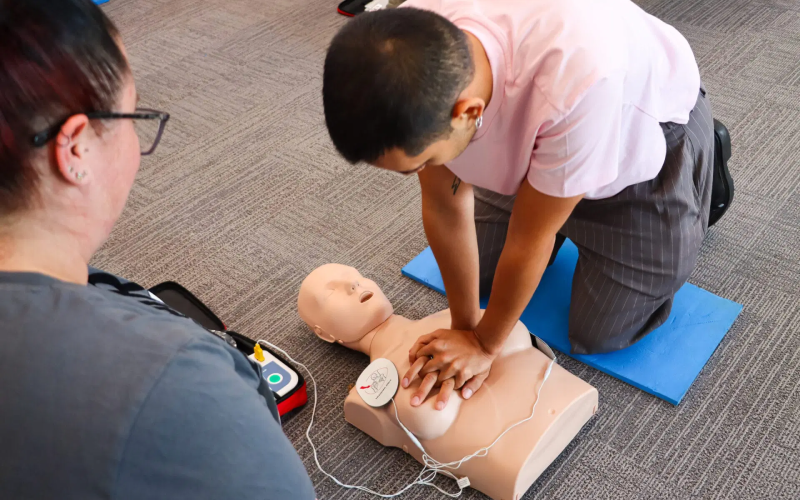
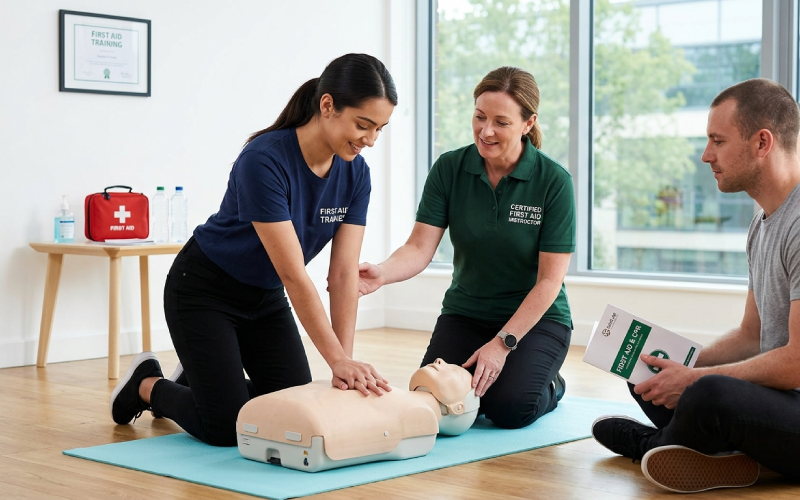
Our Provide Cardiopulmonary Resuscitation (CPR) course equips participants with the practical knowledge and hands-on skills required to respond quickly and effectively during cardiac emergencies. This nationally recognised training focuses on recognising cardiac arrest, performing high-quality CPR, using an Automated External Defibrillator (AED), and providing immediate care until professional medical assistance arrives.
CPR is one of the most important life-saving skills that anyone can learn. Whether you're an employee, teacher, healthcare worker, coach, parent, or community member, this course prepares you to respond confidently in emergencies while meeting Australian Workplace Health and Safety (WHS) requirements and Australian Resuscitation Council (ARC) guidelines.
Through practical training and realistic emergency scenarios, participants gain the confidence to act when every second counts.
Why Choose Our Course?
Our Provide Cardiopulmonary Resuscitation (CPR) training delivers practical, hands-on learning to ensure participants are ready to respond confidently in real emergency situations.
Why Train With Us?
- Qualified and experienced CPR trainers
- Nationally recognised certification
- Practical hands-on CPR training
- Modern AED training equipment
- Realistic emergency response scenarios
- Industry-relevant learning materials
- Flexible training schedules
- Affordable course fees
- Supportive learning environment
- Training aligned with Australian Resuscitation Council (ARC) guidelines and Australian WHS requirements
How booking works
- 1
Select a date and time
Check live session availability before you book.
- 2
Complete enrolment
Confirm your place through secure checkout.
- 3
Attend training
Come to the Malaga centre for face-to-face training.